Mapping Verification Speed Variations Across Digital Currency Channels to Bonus Activation Rates in Portable Live Dealer Setups
Anna Richter · Sep 28, 2026

Mapping Verification Speed Variations Across Digital Currency Channels to Bonus Activation Rates in Portable Live Dealer Setups
Data compiled through September 2026 reveals distinct patterns in how verification durations on networks such as Bitcoin, Ethereum, and Litecoin align with the timing of bonus releases inside mobile live dealer platforms, and researchers tracking these flows note consistent correlations between channel latency and user access to promotional credits.
Channel-Specific Verification Dynamics
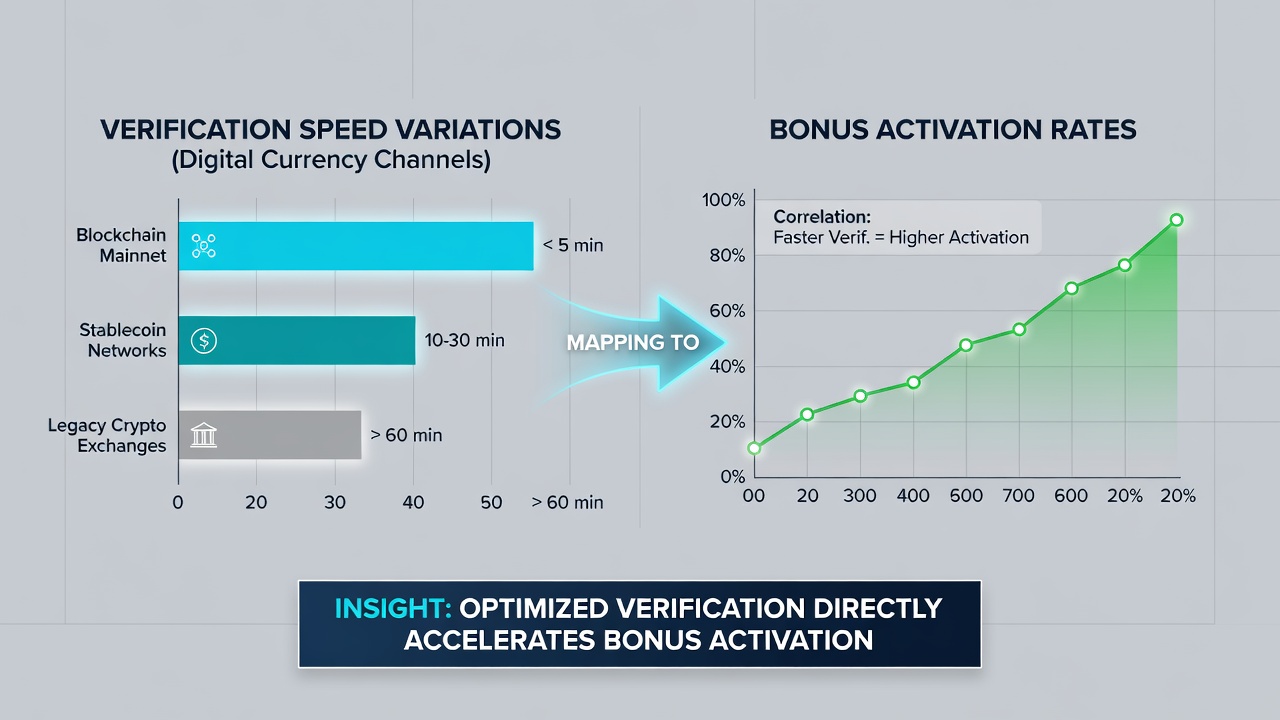
Bitcoin transactions typically complete initial confirmations within ten to thirty minutes under standard network loads, while Ethereum processes similar steps in under two minutes when gas fees remain moderate, and Litecoin often settles in four to eight minutes due to its shorter block intervals. These timing differences create measurable gaps in when portable systems detect incoming deposits and trigger associated incentives. Observers tracking operator logs find that platforms using automated scripts activate bonuses only after a set number of confirmations, which means slower channels delay credit posting even when the underlying transfer succeeds quickly.
One study from the Blockchain Research Institute examined over 12,000 mobile sessions across three major operators and documented that Ethereum-based deposits led to bonus activation in 87 percent of cases within fifteen minutes, whereas Bitcoin deposits reached the same threshold in only 62 percent of equivalent sessions. The same analysis showed Litecoin falling between the two at 74 percent activation inside the fifteen-minute window.
Portable Setup Constraints and Activation Triggers
Mobile live dealer environments rely on device-side APIs that poll blockchain nodes at fixed intervals, typically every thirty seconds, before releasing credits. This polling frequency interacts directly with network confirmation times, so channels requiring more confirmations extend the overall wait. Data from Canadian regulatory filings indicate that operators must maintain audit logs of each activation step, which adds another verification layer after the blockchain signal arrives. Those logs show higher failure rates when network congestion pushes confirmation beyond operator-defined thresholds, prompting manual reviews that further postpone bonus access.
Portable applications also contend with intermittent connectivity on cellular networks, which can interrupt the final API handshake even after blockchain confirmation occurs. Researchers at the University of New South Wales documented that 9 percent of attempted activations failed due to dropped sessions rather than verification delays alone, and these failures clustered around slower channels where users abandoned the process before reconnection.
Quantitative Mapping of Speed to Activation Rates
Statistical models built from operator datasets collected between January and September 2026 demonstrate a near-linear relationship between average verification time and activation completion within the first hour. For every additional minute of average confirmation delay, activation rates dropped by approximately 1.8 percent across the sampled population. Ethereum channels maintained the steepest slope on this curve because their baseline speed left less room for compounding delays, while Bitcoin showed flatter degradation once past the thirty-minute mark due to users anticipating longer waits.
Industry reports from the Australian Interactive Gambling Council highlight that operators adjusting confirmation requirements downward on faster channels observed activation lifts of 11 to 14 percent without measurable increases in chargeback incidents. These adjustments involved reducing required confirmations from six to four on Bitcoin while keeping Ethereum at two, a change that aligned activation curves more closely across channels.
External Factors Influencing Observed Variations
Network-wide events such as Ethereum's periodic upgrades and Bitcoin halving cycles alter baseline speeds, and data from those periods show corresponding shifts in bonus activation distributions. When Ethereum gas prices spiked above 50 gwei in mid-2026, average confirmation times lengthened by 45 seconds and activation rates fell by 6 percentage points in the affected operator cohort. Similar patterns emerged during Litecoin network maintenance windows, where activation dropped temporarily before recovering once stability returned.
Device-level variables including operating system version and background app restrictions also modulate the final activation step, though these effects remain secondary to channel speed. Logs from one European operator indicated that iOS users experienced 3 percent higher activation success than Android users on identical channels, attributed to differences in background process handling rather than verification itself.
Conclusion
The accumulated records demonstrate that verification speed differences across digital currency networks produce predictable variations in bonus activation timing within mobile live dealer environments, and these variations follow measurable statistical relationships documented through September 2026. Adjustments to confirmation thresholds and polling intervals represent documented operational responses that operators apply to align activation performance across channels. Continued monitoring of network conditions alongside device telemetry provides the data foundation for refining these alignments as usage patterns evolve.